
Nerves Spine Chart
Nerves Spine Chart - The brain controls how we think, learn, move, and feel. The vertebral column’s most important physiologic function is protecting the spinal cord, which is the main avenue for communication between the. Web the spinal cord and its nerves are the means by which the body and brain communicate with one another. A dermatome is an area of skin supplied by a single spinal nerve. Web spinal nerves are all mixed nerves with both sensory and motor fibers. This chart illustrates spinal nerves, cranial nerves and diagrams the portion of the thoracic spinal cord with spinal nerves. On the chart below you will see 4 columns (vertebral level, nerve root, innervation, and possible symptoms). This means that the spine is much more. The spine is a major part of the nervous system and has many sensory nerves. Web the spinal cord and peripheral nerves. Each spinal nerve is supplied by 2 nerve roots. [1] [2] these are grouped into the corresponding cervical, thoracic, lumbar, sacral and coccygeal regions of the spine. These nerves are essential for transmitting sensory signals to the brain and for carrying motor commands from the brain to muscles. Web the nerves that branch off of your lower spinal cord and cauda equina control leg sensations and movement. Thoracic spinal nerves are not part of any plexus, but give rise to the intercostal nerves directly. If anything messes with these nerves—like a slipped disc, narrow spine spaces, or a rough injury—it can cause big problems, like pain, numbness, weakness, or even losing movement. Web these 31 pairs of spinal nerves are like the backbone of your peripheral nervous system, making sure your brain and body stay in sync. Web your spine is a complex structure of small bones, cushioning disks, nerves, joints, ligaments and muscles. Spinal nerves can be impacted by a variety of medical conditions, resulting in pain, weakness, or decreased sensation. The brain by the bones of the skull, and the spinal. The point at which a nerve exits the spinal cord is called a nerve root. If anything messes with these nerves—like a slipped disc, narrow spine spaces, or a rough injury—it can cause big problems, like pain, numbness, weakness, or even losing movement. Web there are 8 pairs of spinal nerves in the cervical spine, labeled c1 to c8. For. Web these relay motor (movement), sensory (sensation), and autonomic (involuntary functions) signals between the spinal cord and other parts of the body. The vertebral column’s most important physiologic function is protecting the spinal cord, which is the main avenue for communication between the. Web there are 31 pairs of spinal nerves: This means that the spine is much more. Web. Each nerve is named after the vertebra above it. Spinal cord segments, cutaneous distribution of spinal nerves and dermal segmentation are also shown. The brain controls how we think, learn, move, and feel. Web these relay motor (movement), sensory (sensation), and autonomic (involuntary functions) signals between the spinal cord and other parts of the body. [1] [2] these are grouped. The brain by the bones of the skull, and the spinal. These nerves are essential for transmitting sensory signals to the brain and for carrying motor commands from the brain to muscles. The vertebral column’s most important physiologic function is protecting the spinal cord, which is the main avenue for communication between the. The spine is a major part of. Both the brain and the spinal cord are protected by bone: Eight cervical spinal nerve pairs, 12 thoracic pairs , five lumbar pairs, five sacral pairs, and one coccygeal. Web background bilateral diaphragmatic dysfunction can lead to dyspnea and recurrent respiratory failure. Web how to use the spinal nerve chart: Thoracic spinal nerves are not part of any plexus, but. Web there are cervical, thoracic, and lumbar nerves. Web spinal nerves are all mixed nerves with both sensory and motor fibers. These nerves are essential for transmitting sensory signals to the brain and for carrying motor commands from the brain to muscles. Web a spinal nerve chart provides a visual reference to help memorize the vertebral levels, sensory pathways, and. Web the spinal cord and peripheral nerves. Both the brain and the spinal cord are protected by bone: Spinal nerves emerge from the spinal cord and reorganize through plexuses, which then give rise to systemic nerves. Together, the brain and spinal cord make up the central nervous system. Web spinal nerves are all mixed nerves with both sensory and motor. Web there are cervical, thoracic, and lumbar nerves. The spinal cord carries messages back and forth between the brain and the nerves that run throughout the body. The spine is a major part of the nervous system and has many sensory nerves. Web background bilateral diaphragmatic dysfunction can lead to dyspnea and recurrent respiratory failure. Each one is named after. Web there are 5 pairs of spinal nerves in the lumbar spine, labeled l1 to l5. The spinal cord begins at the base of the brain and extends into the pelvis. Web there are 31 pairs of spinal nerves: Web spinal nerves are mixed nerves that emerge from the spinal cord and carry both motor and sensory information between the. Web there are 5 pairs of spinal nerves in the lumbar spine, labeled l1 to l5. Spinal nerves emerge from the spinal cord and reorganize through plexuses, which then give rise to systemic nerves. Each spinal nerve is supplied by 2 nerve roots. The brain by the bones of the skull, and the spinal. Web the spinal cord and peripheral. Each spinal nerve is supplied by 2 nerve roots. Thoracic spinal nerves are not part of any plexus, but give rise to the intercostal nerves directly. Web the central nervous system is made up of the brain and spinal cord: Web these relay motor (movement), sensory (sensation), and autonomic (involuntary functions) signals between the spinal cord and other parts of the body. Web there are cervical, thoracic, and lumbar nerves. Web the spinal cord and its nerves are the means by which the body and brain communicate with one another. Web these 31 pairs of spinal nerves are like the backbone of your peripheral nervous system, making sure your brain and body stay in sync. Web spinal nerves are all mixed nerves with both sensory and motor fibers. These nerves play important roles in sending messages to and from the spinal cord, enabling the brain to communicate with parts of the upper body. If anything messes with these nerves—like a slipped disc, narrow spine spaces, or a rough injury—it can cause big problems, like pain, numbness, weakness, or even losing movement. The worst place to get a tattoo and notable seconds. On the chart below you will see 4 columns (vertebral level, nerve root, innervation, and possible symptoms). Web your spine is a complex structure of small bones, cushioning disks, nerves, joints, ligaments and muscles. Web there are 5 pairs of spinal nerves in the lumbar spine, labeled l1 to l5. This means that the spine is much more. The spinal cord carries messages back and forth between the brain and the nerves that run throughout the body.
Printable Spinal Nerve Chart Printable World Holiday

Spinal Nerves Anatomical Chart Spine and Cranial Nervous System
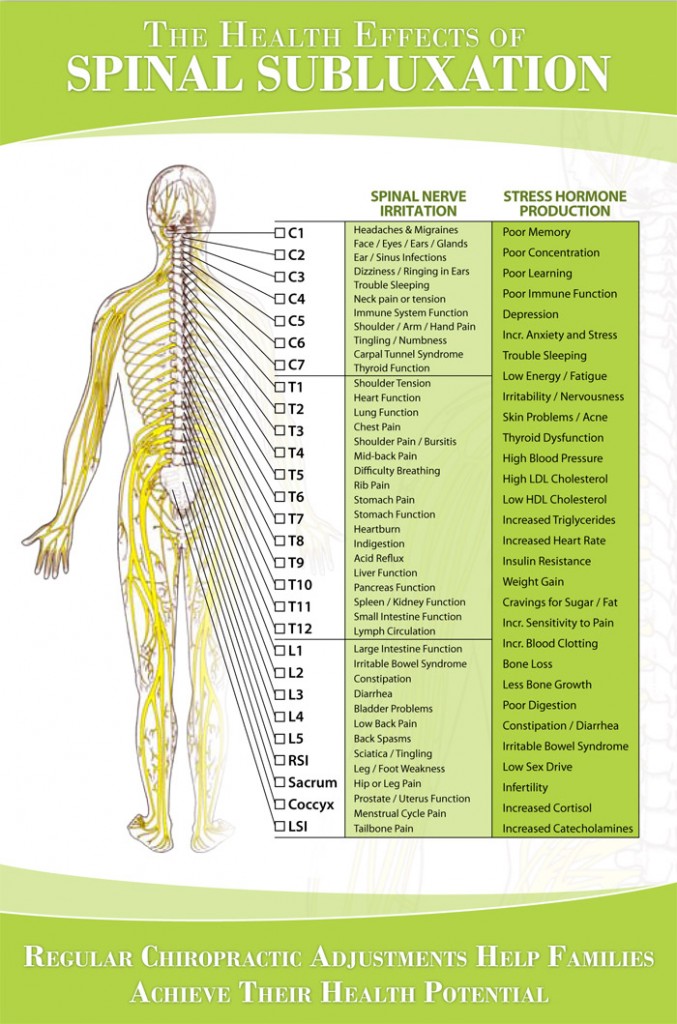
Nerve Chart Hunter Chiropractic Wellness Centre
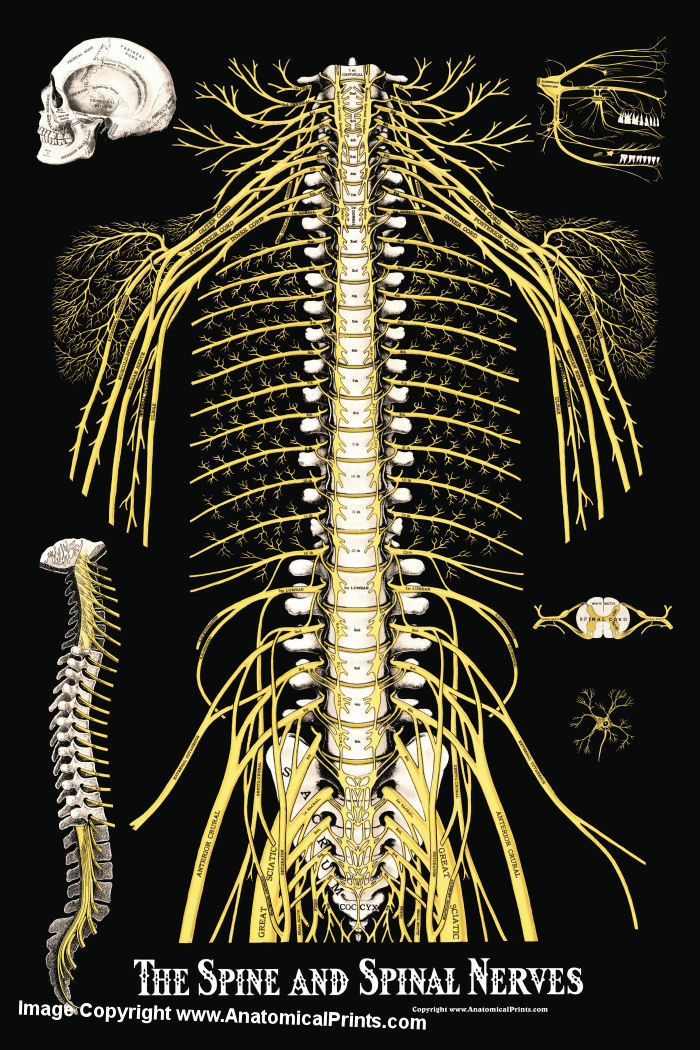
The Spine and Spinal Nerves Poster Clinical Charts and Supplies

Spinal Nerve Function Anatomical Chart Anatomy Models and Anatomical
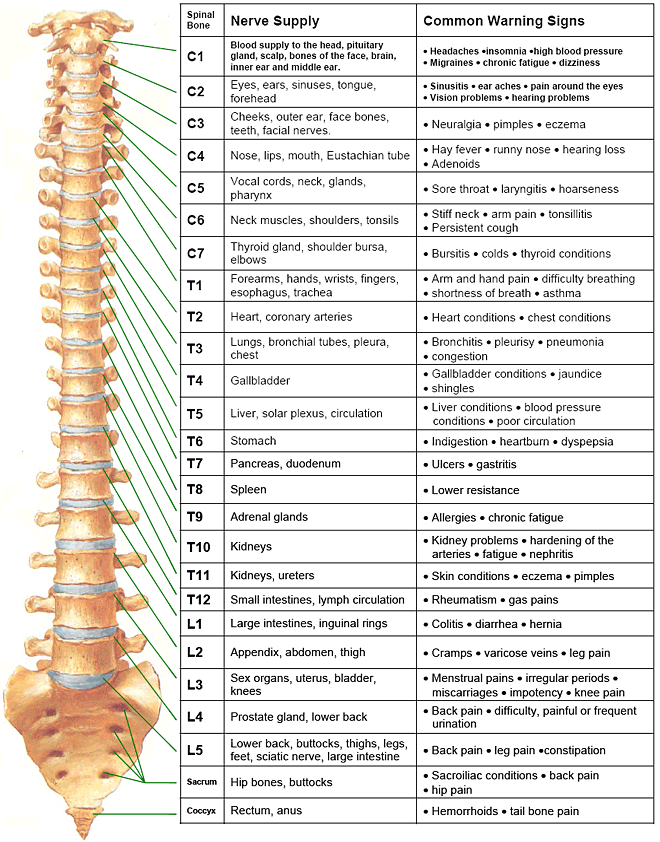
Printable Spinal Nerve Chart
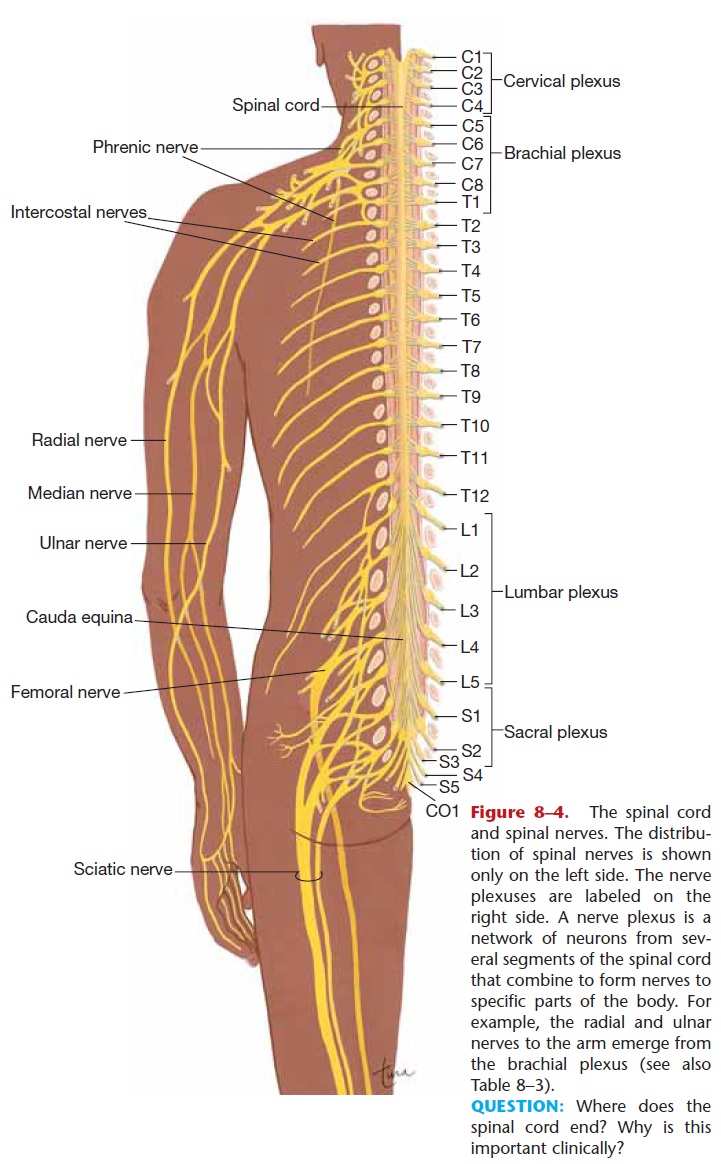
Spinal Nerves
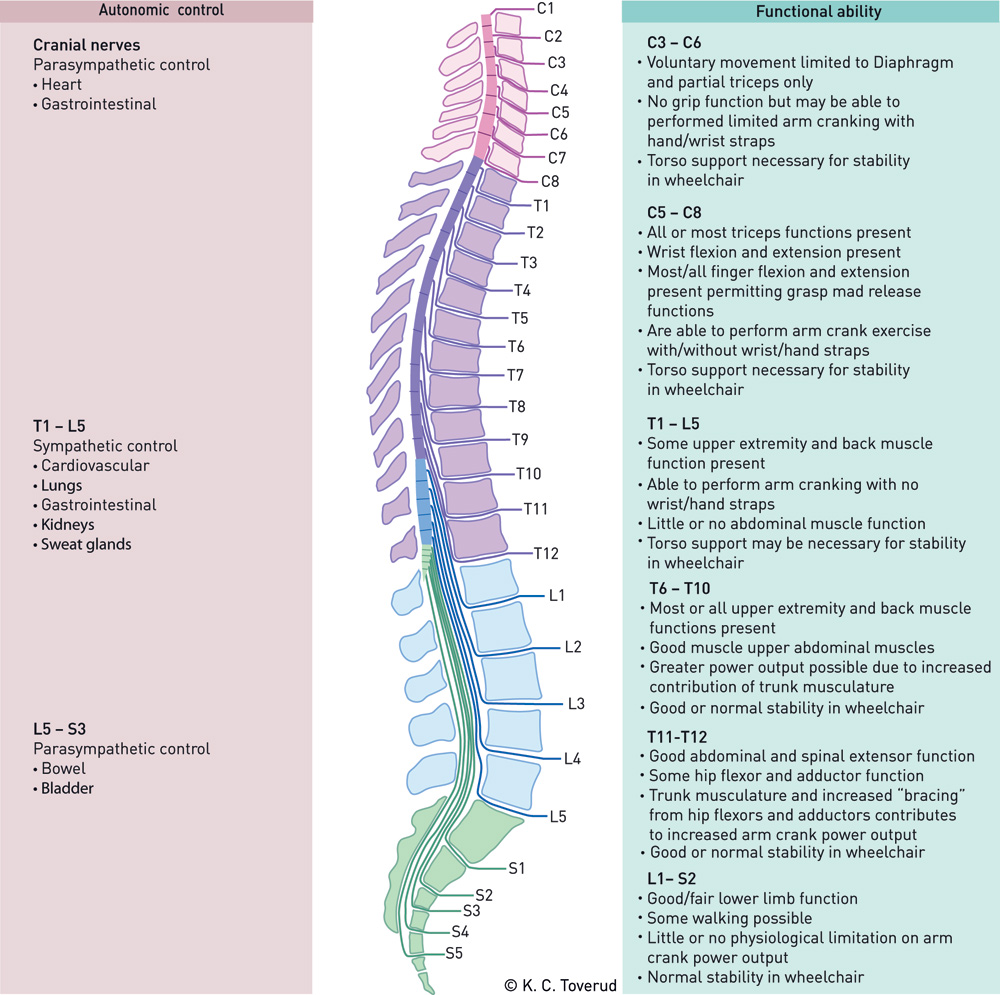
Important Nerves in the Body and What They Do NorthEast Spine and
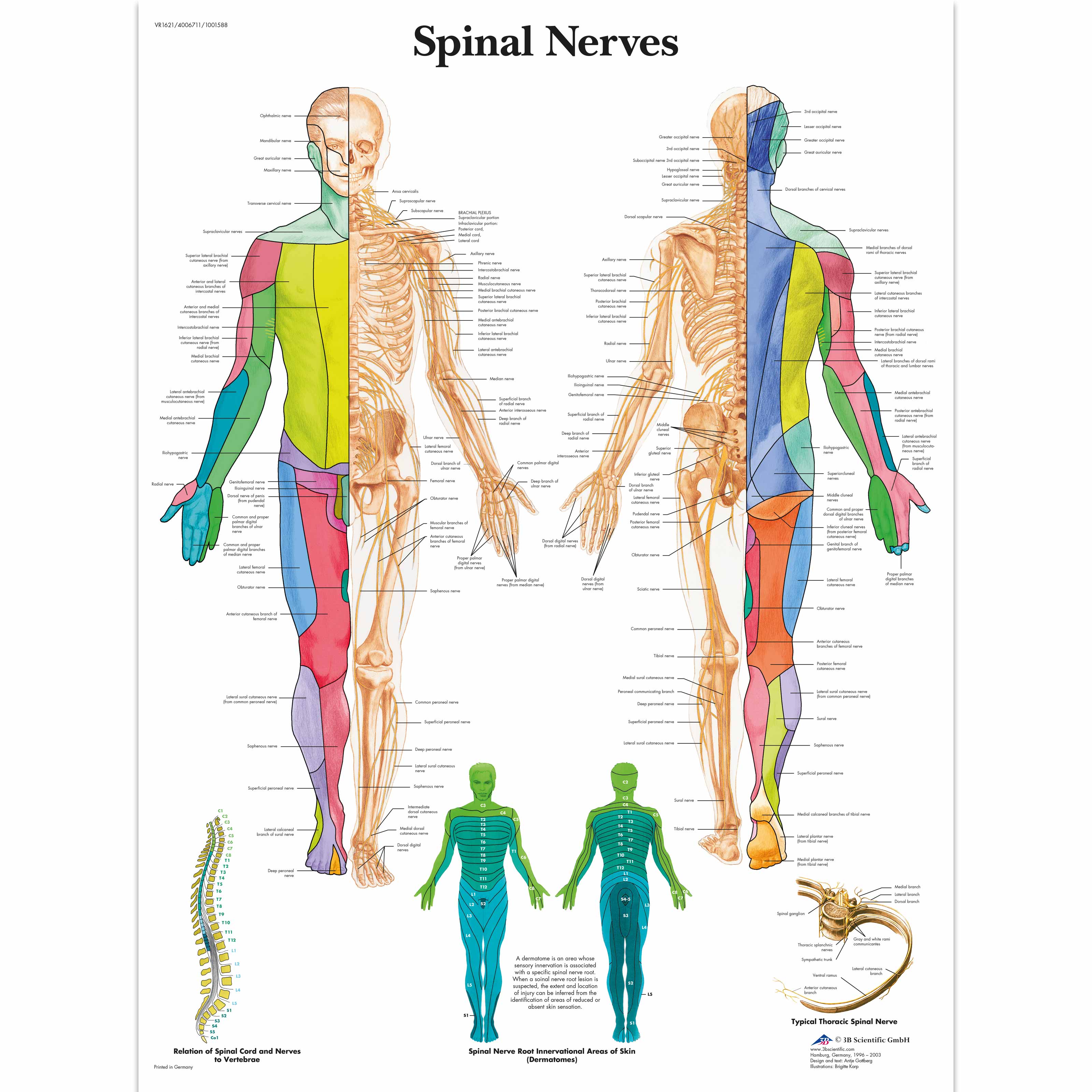
Anatomical Charts and Posters Anatomy Charts Spinal Nerves

Spinal Nerve Chart
Web The Spinal Cord And Peripheral Nerves.
8 Cervical, 12 Thoracic, 5 Lumbar, 5 Sacral, And 1 Coccygeal, Named According To Their Corresponding Vertebral Levels.
Web There Are 31 Bilateral Pairs Of Spinal Nerves, Named From The Vertebra They Correspond To.
The Point At Which A Nerve Exits The Spinal Cord Is Called A Nerve Root.
Related Post: