
Hebrew Verb Conjugation Chart
Hebrew Verb Conjugation Chart - Web the pa'alulan is an interactive tool for learning the hebrew verb system. Web in introducing the hebrew verb system, we discuss here the prefix and suffix conjugations, the seven patterns of the hebrew verb, the imperative and infinitive, and the grouping of verbs according to their root consonants. The final radical of this word disappears or turns into a vowel in inflected forms. Web the futur simple is one of the most regular verb tenses in french. Beyond these, it also conjugates verbs in all other tenses used in hebrew. Below is a list of the most common words and phrases used with the past tense, along with sample sentences. To be able to, can. Web since you already know the qal conjugation, you can likely already identify the tense and person of any verb, even if you don't know which conjugation it is in. Web the top429 verbs are the verbs that occur 20+ times in the hebrew bible.*. Web in hebrew, verbs, which take the form of derived stems, are conjugated to reflect their tense and mood, as well as to agree with their subjects in gender, number, and person. Conjugation chart for a hebrew verb. Futur simple is more formal and more likely to be used in writing than in speech. Conjugate a verb in hebrew with reverso conjugator, see hebrew conjugation models, conjugated forms in future, participle, present, past. Web in hebrew, the past tense is used to express any completed action or state. Web the pa'alulan is an interactive tool for learning the hebrew verb system. Luckily for hebrew language learners, these patterns are pretty strictly followed, with few exceptions. Web this hebrew verb conjugation chart: Included in the charts are the verb root, gloss, frequency, an example (usually qal wayyiqtol 3ms), and the categorization according to the root letter type and position. Download the anki file for 1 00 basic hebrew verbs here. Web the top429 verbs are the verbs that occur 20+ times in the hebrew bible.*. Complete verb tables, dictionary, search and pronunciation guide. Web since you already know the qal conjugation, you can likely already identify the tense and person of any verb, even if you don't know which conjugation it is in. In the columns to the right, you’ll note the verb’s infinitive (the “to” form) and what it means, its root, and the. Conjugate a verb in hebrew with reverso conjugator, see hebrew conjugation models, conjugated forms in future, participle, present, past. Complete verb tables, dictionary, search and pronunciation guide. Use pealim.com for checking word inflection: Use pealim.com for checking word inflection: Web since you already know the qal conjugation, you can likely already identify the tense and person of any verb, even. Web in hebrew, the past tense is used to express any completed action or state. Web this hebrew verb conjugation chart: Conjugate hundreds of verbs, in class or at home. Beyond these, it also conjugates verbs in all other tenses used in hebrew. Web the futur simple is one of the most regular verb tenses in french. Web the futur simple is one of the most regular verb tenses in french. Web this tool adeptly handles the diverse verb forms present in hebrew, covering essential tenses such as the past, present, and future, which are fundamental to the language. Web introduction to the binyanim, or hebrew verb conjugation patterns. I've sorted them to group by type rather.. Web this hebrew verb conjugation chart: Web since you already know the qal conjugation, you can likely already identify the tense and person of any verb, even if you don't know which conjugation it is in. Web the pa'alulan is an interactive tool for learning the hebrew verb system. In the columns to the right, you’ll note the verb’s infinitive. Complete verb tables, dictionary, search and pronunciation guide. The charts below are grouped according to the verb type. Web the pa'alulan is an interactive tool for learning the hebrew verb system. Conjugate hundreds of verbs, in class or at home. Web the futur simple is one of the most regular verb tenses in french. Web this hebrew verb conjugation chart: Web the first section of the book covers regular structures, including all the regular binyanim with charts showing how to plug in your shoresh to get any tense. Similar to other languages, the hebrew verb system uses patterns to help us conjugate verbs. The charts below are grouped according to the verb type. Futur. Terminal ה, etc.) affect the pattern. Web 501 hebrew verbs : Use pealim.com for checking word inflection: * click or move your mouse over the forms marked with a * to see more. Web the first section of the book covers regular structures, including all the regular binyanim with charts showing how to plug in your shoresh to get any. Web this tool adeptly handles the diverse verb forms present in hebrew, covering essential tenses such as the past, present, and future, which are fundamental to the language. Complete verb tables, dictionary, search and pronunciation guide. Use pealim.com for checking word inflection: Use pealim.com for checking word inflection: עַמְשִׁנ niphal perfect 3ms from עַמָשׁ the lexical form of most triconsonantal. Web the futur simple is one of the most regular verb tenses in french. Web 501 hebrew verbs : Below is a list of the most common words and phrases used with the past tense, along with sample sentences. Complete verb tables, dictionary, search and pronunciation guide. Web the first section of the book covers regular structures, including all the. Most verbs can be conjugated by taking the infinitive and adding the appropriate ending: The final radical of this word disappears or turns into a vowel in inflected forms. Example sentences for every verb! Use pealim.com for checking word inflection: Below is a list of the most common words and phrases used with the past tense, along with sample sentences. Use pealim.com for checking word inflection: Web in introducing the hebrew verb system, we discuss here the prefix and suffix conjugations, the seven patterns of the hebrew verb, the imperative and infinitive, and the grouping of verbs according to their root consonants. Web about hebrew conjugations to make matters just a little more complicated, each of these seven binyanim can be conjugated in no less than eight different ways! Use pealim.com for checking word inflection: Complete verb tables, dictionary, search and pronunciation guide. Web in hebrew, verbs, which take the form of derived stems, are conjugated to reflect their tense and mood, as well as to agree with their subjects in gender, number, and person. Complete verb tables, dictionary, search and pronunciation guide. To be able to, can. Web in hebrew, the past tense is used to express any completed action or state. There are no progressive or perfect past forms in hebrew, so these are expressed using context and time cues. Complete verb tables, dictionary, search and pronunciation guide.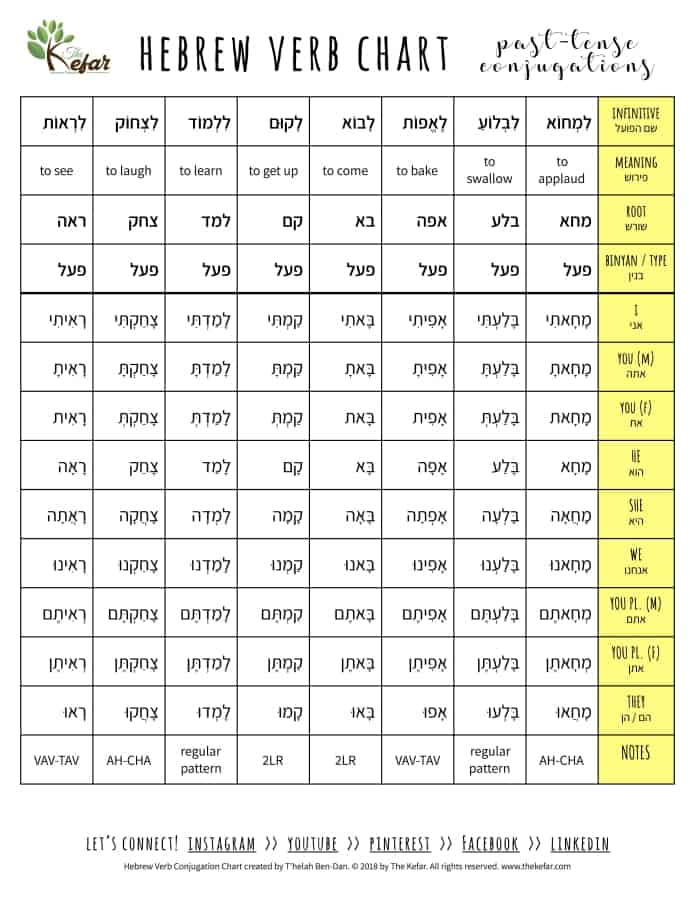
Hebrew Verbs Lesson 14 Conjugating Verbs Answer Key The Kefar
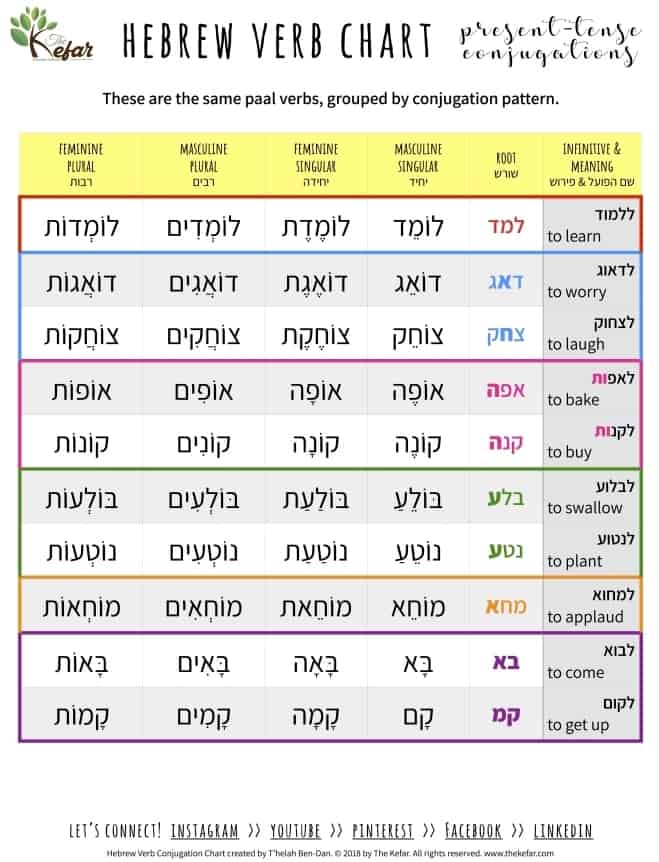
Hebrew Verbs Lesson 8 Conjugating Verbs Answer Key The Kefar

Conjugate Hebrew verbs with my FREE chart! The Kefar
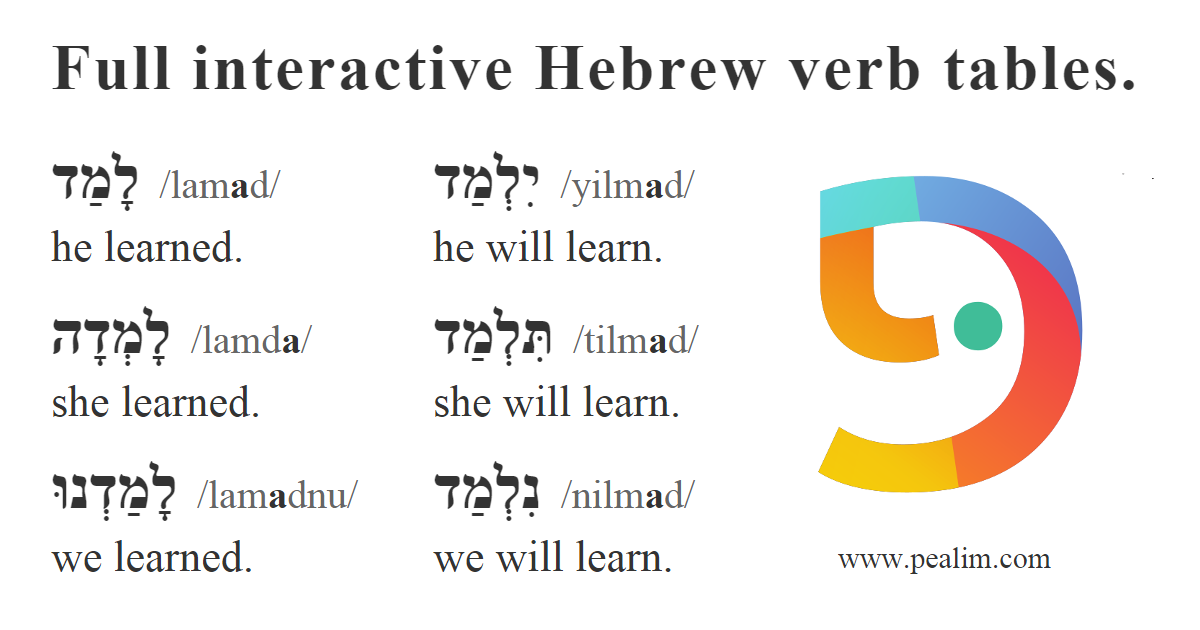
Hebrew learning resources Hebrew conjugation tables

Hebrew Verb Conjugation Chart A Visual Reference of Charts Chart Master
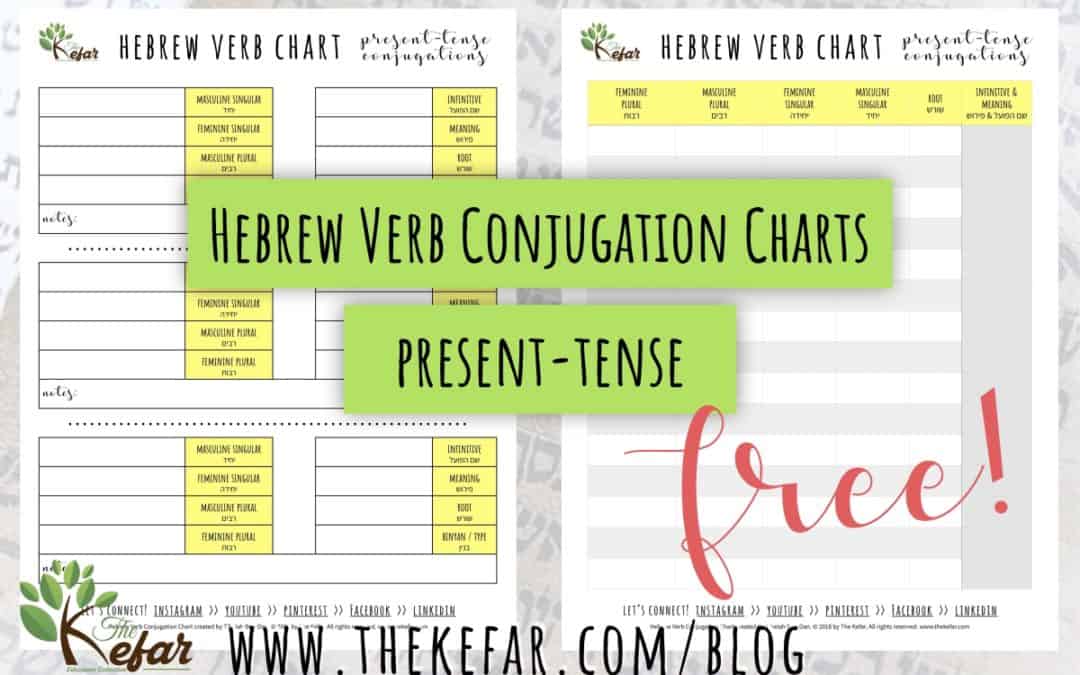
Conjugate Hebrew verbs with my FREE chart! The Kefar
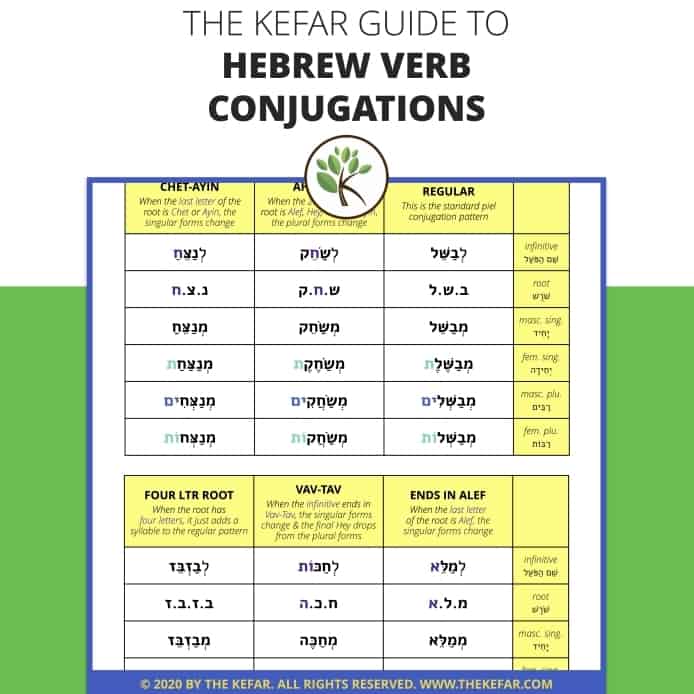
Guide to Hebrew Verb Conjugations The Kefar
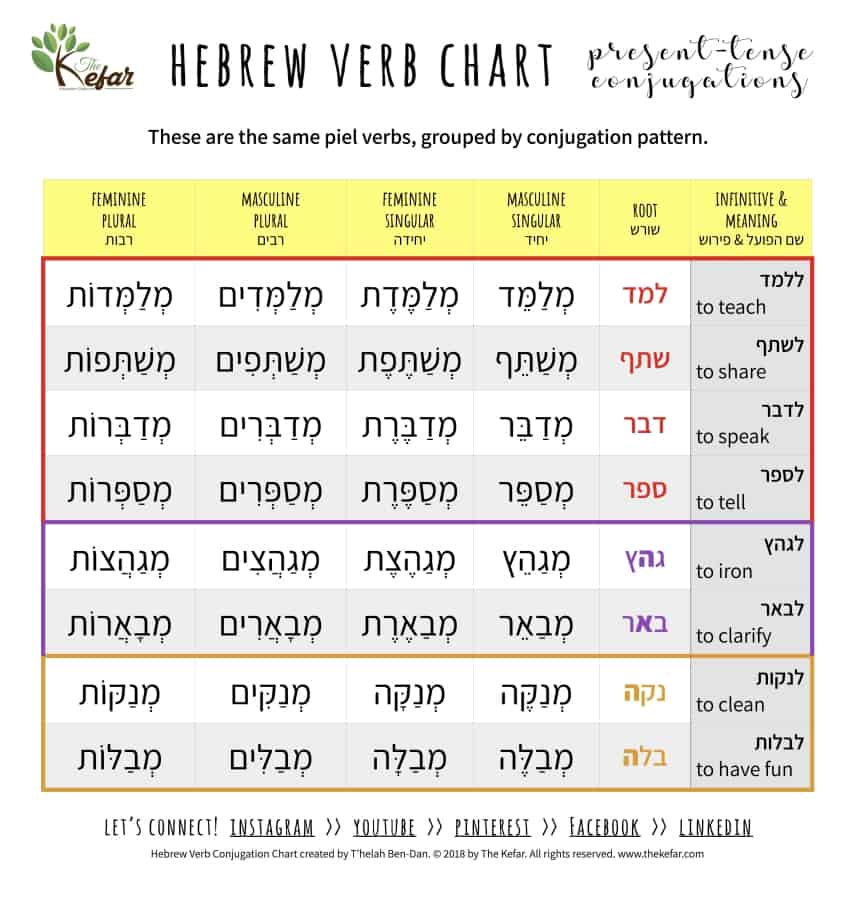
Hebrew Verbs Lesson 18 Conjugating Verbs Answer Key The Kefar
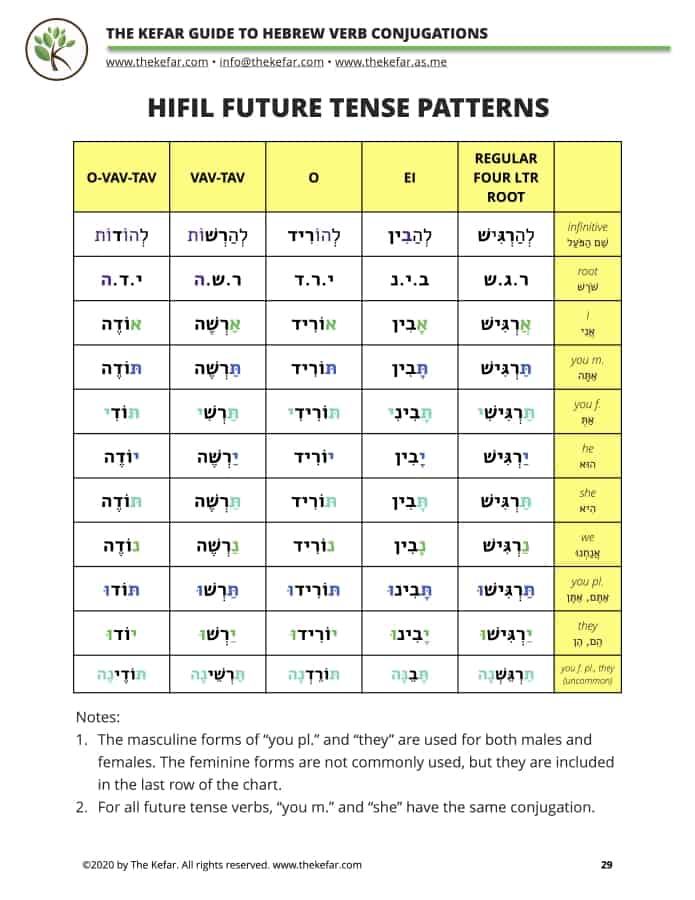
Guide to Hebrew Verb Conjugations The Kefar

Hebrew Past Tense Chart
Terminal ה, Etc.) Affect The Pattern.
The First Radical Of This Word Is Guttural;
Similar To Other Languages, The Hebrew Verb System Uses Patterns To Help Us Conjugate Verbs.
Web This Tool Adeptly Handles The Diverse Verb Forms Present In Hebrew, Covering Essential Tenses Such As The Past, Present, And Future, Which Are Fundamental To The Language.
Related Post: