
Geothermal Temperature Depth Chart
Geothermal Temperature Depth Chart - Web see how we can generate clean, renewable energy from hot water sources deep beneath the earth's surface. Additional data on temperature of flows have been given by correspondents. Web geothermal gradient is the rate of change in temperature with respect to increasing depth in earth's interior. Web getech’s workflow for modelling temperature at depth maps the curie temperature depth (ctd) from three types of data; Web the national renewable energy laboratory's geothermal prospector provides a huge amount of information about geothermal energy in the united states. About half of the solar radiation received by the earth is absorbed at the surface. A temperature gradient of 30oc/km (depending on the thermal conductivity of the rock). Web explore data illustrating the future potential of geothermal energy on electricity generation, district heating, and geothermal heat pumps (ghps). Web earth’s temperature rises with depth from the surface to the core. In other words, for geothermal purposes, the change in temperature with depth. There will be a corresponding difference at 5 to 10 m depth. It indicates heat flowing from the earth’s warm interior to its surface. Click here to use the national geothermal. This gradual change in temperature is known as the geothermal gradient. As a general rule, the crust temperature rises with depth due to the heat flow from the much hotter mantle ; Web the national renewable energy laboratory's geothermal prospector provides a huge amount of information about geothermal energy in the united states. Calculation of the heat flow values requires knowledge of both the temperature gradient at a location and the thermal properties of the rocks in which the gradient is measured. Heat flow is much greater than 65mw/m2. Away from tectonic plate boundaries, it is about 25 °c per km of depth (1 °f per 70 feet of depth) in most of the world. In normal continental crust a typical geothermal gradient within the first 3 to 5 kilometers (2 or 3 miles) of earth’s surface is about 25°c/km. In most parts of the world, the geothermal gradient is about 25° c per. Web the geothermal map of north america is a heat flow map depicting the natural heat loss from the interior of earth to the surface. In other words, for geothermal purposes, the change in temperature with depth. Calculation of the heat flow values requires knowledge of. The british geological survey states: In normal continental crust a typical geothermal gradient within the first 3 to 5 kilometers (2 or 3 miles) of earth’s surface is about 25°c/km. Some of the data, especially those relating to flows from wells, may not be reliable, and as a rule these could not be discriminated. Click here to use the national. The broadly contoured map displays 284 temperature gradients that are applicable to a depth of 2 km. Web users can search for locations or keywords related to geothermal data and the map will display a catalog of documents and datasets that provide information about geothermal resources across the u.s. The increase in temperature with depth in the earth, commonly in. Web geothermal gradients from published temperature/depth measurements in drill holes generally deeper than 600 m are used to construct a temperature gradient map of the conterminous united states. In other words, for geothermal purposes, the change in temperature with depth. Web geothermal gradient is the rate of increasing temperature with respect to increasing depth in the earth's interior. On average,. Web geothermal gradient is the rate of change in temperature with respect to increasing depth in earth's interior. Web geothermal gradients from published temperature/depth measurements in drill holes generally deeper than 600 m are used to construct a temperature gradient map of the conterminous united states. Away from tectonic plate boundaries, it is about 25 °c per km of depth. Known geothermal resource areas and exploration regions; Web earth’s temperature rises with depth from the surface to the core. The increase in temperature with depth in the earth, commonly in degrees celsius per kilometer or degrees fahrenheit per 100 feet. Terrestrial magnetic data (collected at ground level, or from airborne or shipborne surveys), satellite magnetic data and surface heat flow. The broadly contoured map displays 284 temperature gradients that are applicable to a depth of 2 km. Away from tectonic plate boundaries, it is about 25 °c per km of depth (1 °f per 70 feet of depth) in most of the world. A temperature gradient of 30oc/km (depending on the thermal conductivity of the rock). What is more commonly. Additional data on temperature of flows have been given by correspondents. Web smu geothermal lab calculates temperatures at specific depth intervals using these variables to produce the temperature maps at different depth slices for the united states. Most of the measured temperatures used in the calculations are from sedimentary rocks which overlie the harder basement rock. The british geological survey. In other words, for geothermal purposes, the change in temperature with depth. Heat flow is much greater than 65mw/m2. Web the national renewable energy laboratory's geothermal prospector provides a huge amount of information about geothermal energy in the united states. A temperature gradient of 30oc/km (depending on the thermal conductivity of the rock). Gradients are sensitive to basal heat flow,. As a general rule, the crust temperature rises with depth due to the heat flow from the much hotter mantle ; Away from tectonic plate boundaries, it is about 25 °c per km of depth (1 °f per 70 feet of depth) in most of the world. Web explore data illustrating the future potential of geothermal energy on electricity generation,. Known geothermal resource areas and exploration regions; Web getech’s workflow for modelling temperature at depth maps the curie temperature depth (ctd) from three types of data; As a general rule, the crust temperature rises with depth due to the heat flow from the much hotter mantle ; Most of the measured temperatures used in the calculations are from sedimentary rocks which overlie the harder basement rock. Gradients are sensitive to basal heat flow, lithology, circulating groundwater, and the. Heat flow is much greater than 65mw/m2. Web see how we can generate clean, renewable energy from hot water sources deep beneath the earth's surface. Some of the data, especially those relating to flows from wells, may not be reliable, and as a rule these could not be discriminated. Web geothermal gradient is the rate of change in temperature with respect to increasing depth in earth's interior. In other words, for geothermal purposes, the change in temperature with depth. It indicates heat flowing from the earth’s warm interior to its surface. There will be a corresponding difference at 5 to 10 m depth. Web the geothermal gradient is defined as the increase in temperature with depth in the earth. On average, the temperature increases by about 25°c for every kilometer of depth. The broadly contoured map displays 284 temperature gradients that are applicable to a depth of 2 km. Click here to use the national geothermal.Exploration & Production Geology • View image Estimation of Formation

2024 Öl und Gasbohrtechnologie könnte Fernwärme möglich machen

Depth versus temperature plot of geothermal data of temperatures

Science Behind Geothermal Systems / What is a Geothermal System? Air

Temperature at 2000 m depth map for Europe extracted from the Atlas of
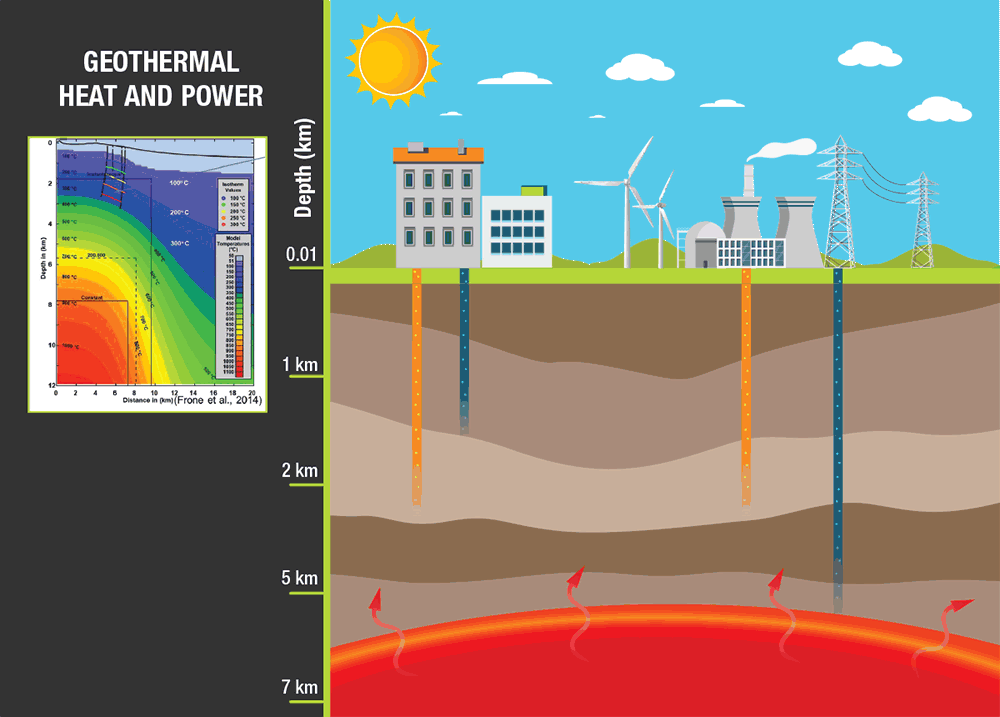
TESTCEM Geothermal Energy Overview

4. A plot of the geothermal gradient shows that the temperature
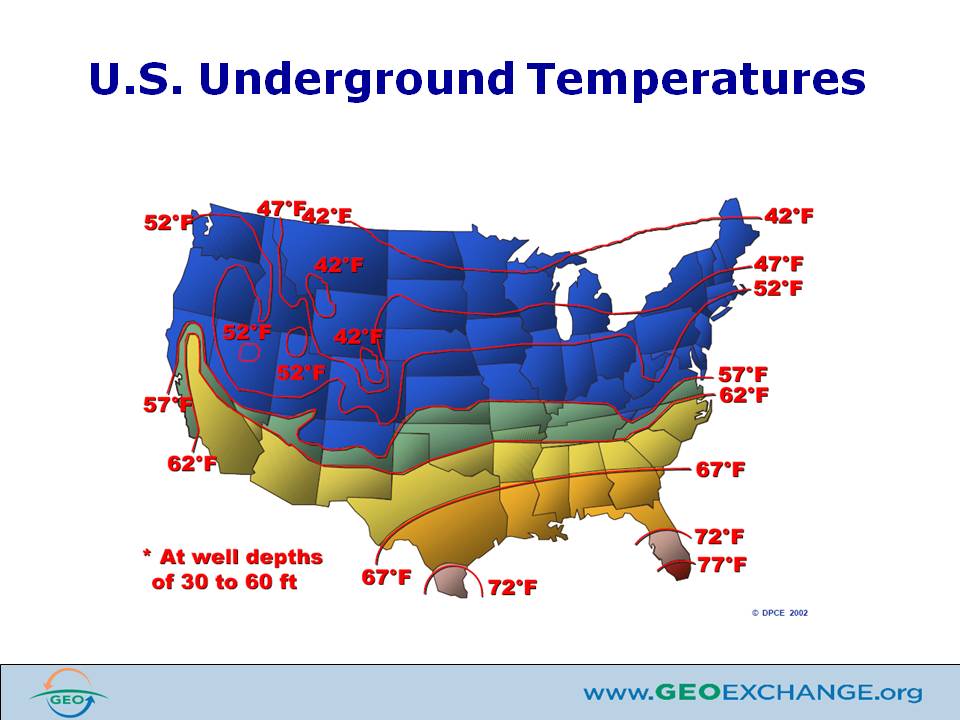
Earth Temperature Depth Chart The Earth Images
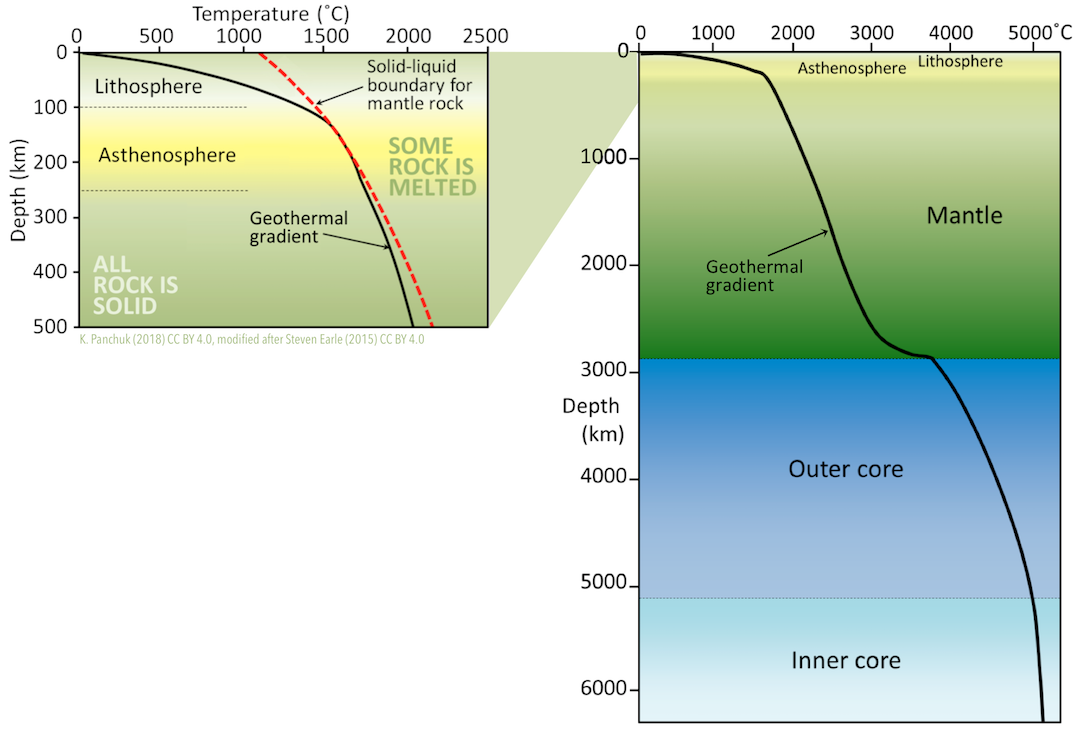
3.3 Earth’s Interior Heat Physical Geology H5P Edition V1.1

Schematic depth temperature plot for geothermal resources (Click
Terrestrial Magnetic Data (Collected At Ground Level, Or From Airborne Or Shipborne Surveys), Satellite Magnetic Data And Surface Heat Flow Measurements (Figure 1).
Web The Geothermal Map Of North America Is A Heat Flow Map Depicting The Natural Heat Loss From The Interior Of Earth To The Surface.
A Normal Temperature Curve Is A Consistent Increase In Temperature With Depth.
Web Records Of Temperature Of Flowing Wells And Also A Few Observations Made With Thermometers In Borings And Deep Mines.
Related Post: