
Dew Point On A Psychrometric Chart
Dew Point On A Psychrometric Chart - The chapter content includes information on dry bulb and wet bulb temperatures, dew point, and using a psychrometric table to determine the moisture content of the air. At temperatures below the dew point, the rate of condensation will be greater than that of evaporation, forming more liquid water. On a psychrometric chart, the dew point is indicated by the curved line known as the saturation line or. The air in contact with the windows. Web on the right side of the chart, locate the vertical line labeled ‘dew point’. Web by combining the dry bulb and wet bulb temperature in a psychrometric chart or mollier diagram the state of the humid air can be determined. Support ip and si units. What is a psychrometric chart? Web dew point temperature lines. Web the dew point temperature (tdew) is the temperature where water vapor starts to condensate from the air. Dew point is expressed as a temperature. This video describes psychrometric chart complete information including what is psychrometric chart which parameters. From the state [clarification needed] point follow the horizontal line of constant humidity ratio to the intercept of 100% rh, also known as the saturation curve. A common use of a psychrometric chart for sizing an air cooling system is to determine the enthalpy value of the air that needs to be cooled. Specific volume is the reciprocal of density. Web the dew point is approximately 60ºf. Lines of constant wet bulb temperatures run diagonally from the upper left to the. A convenient, precise and customizable psychrometric chart & calculator tool for hvac engineers. At temperatures below the dew point, the rate of condensation will be greater than that of evaporation, forming more liquid water. The dew point is measured vertically and usually measured in degrees fahrenheit or degrees celsius, on this chart it is measured in fahrenheit. Web dew point temperature lines. Web the psychometric chart (see image #2, below) is a graph that shows (among other things) the relationships between air temperature, relative humidity, and dew points under a variety of conditions. Web the dew point is approximately 60ºf. Web the dew point temperature (tdew) is the temperature where water vapor starts to condensate from the. The psychrometric chart is your friend. A common use of a psychrometric chart for sizing an air cooling system is to determine the enthalpy value of the air that needs to be cooled. All psychrometric process changes between the points. Dew point temperature is read on the saturation curve. The dew point temperature is found along the 100% rh line. Web two tables are under the chart: From the state [clarification needed] point follow the horizontal line of constant humidity ratio to the intercept of 100% rh, also known as the saturation curve. This video describes psychrometric chart complete information including what is psychrometric chart which parameters. What is a psychrometric chart? All psychrometric properties of the plotted air conditions. A common use of a psychrometric chart for sizing an air cooling system is to determine the enthalpy value of the air that needs to be cooled. Web on the right side of the chart, locate the vertical line labeled ‘dew point’. Web dew point or saturation temperature. This is the temperature at which air becomes saturated, and condensation begins. Locate the dry bulb temperature: Chapter 7 describes the key weather factors referenced in the field, namely temperature and relative humidity. What this tells you is that dew point does not change as. Web the dew point is approximately 60ºf. Dew point temperature is read on the saturation curve. The dew point temperature is equal to the fully saturated dry bulb or. The chapter content includes information on dry bulb and wet bulb temperatures, dew point, and using a psychrometric table to determine the moisture content of the air. All psychrometric properties of the plotted air conditions. At temperatures below the dew point, the rate of condensation will be. Density represents the mass of air per volume. A convenient, precise and customizable psychrometric chart & calculator tool for hvac engineers. Like the wet bulb temperature the dew point temperature is also fully saturated (100% relative humidity). The psychrometric chart is your friend. The temperature at which water vapor in the air condenses. At saturation, dew point = wet bulb = dry bulb. Web by combining the dry bulb and wet bulb temperature in a psychrometric chart or mollier diagram the state of the humid air can be determined. That means if the outdoor air cools from 75º to 60ºf, it will become saturated and dew will form on outdoor surfaces. Web the. The psychrometric chart is your friend. Web dew point or saturation temperature. Web the dew point is represented on the chart by point 3. This is the temperature at which air becomes saturated, and condensation begins to form. At saturation, dew point = wet bulb = dry bulb. Like the wet bulb temperature the dew point temperature is also fully saturated (100% relative humidity). From the state [clarification needed] point follow the horizontal line of constant humidity ratio to the intercept of 100% rh, also known as the saturation curve. If condensation forms on a window, then the surface of the window is at or below the dew. What this tells you is that dew point does not change as. All psychrometric process changes between the points. The chapter content includes information on dry bulb and wet bulb temperatures, dew point, and using a psychrometric table to determine the moisture content of the air. Chapter 7 describes the key weather factors referenced in the field, namely temperature and relative humidity. Web two tables are under the chart: The dew point will be read by moving horizontally (yellow) using the same lines as if you were reading absolute humidity (pink), but the number readings will use the (blue) 100% rh curve line as the base axis, just like with the wet bulb temperature (green). Web look on the right side of the chart to find the vertical dew point line. Web on the right side of the chart, locate the vertical line labeled ‘dew point’. Locate the dry bulb temperature: Dew point occurs at the saturation line where relative humidity equals 100%. Dew point temperature is read on the saturation curve. Web dew point or saturation temperature. On a psychrometric chart, the dew point is indicated by the curved line known as the saturation line or. At temperatures below the dew point, the rate of condensation will be greater than that of evaporation, forming more liquid water. The air in contact with the windows. This is the temperature at which air becomes saturated, and condensation begins to form.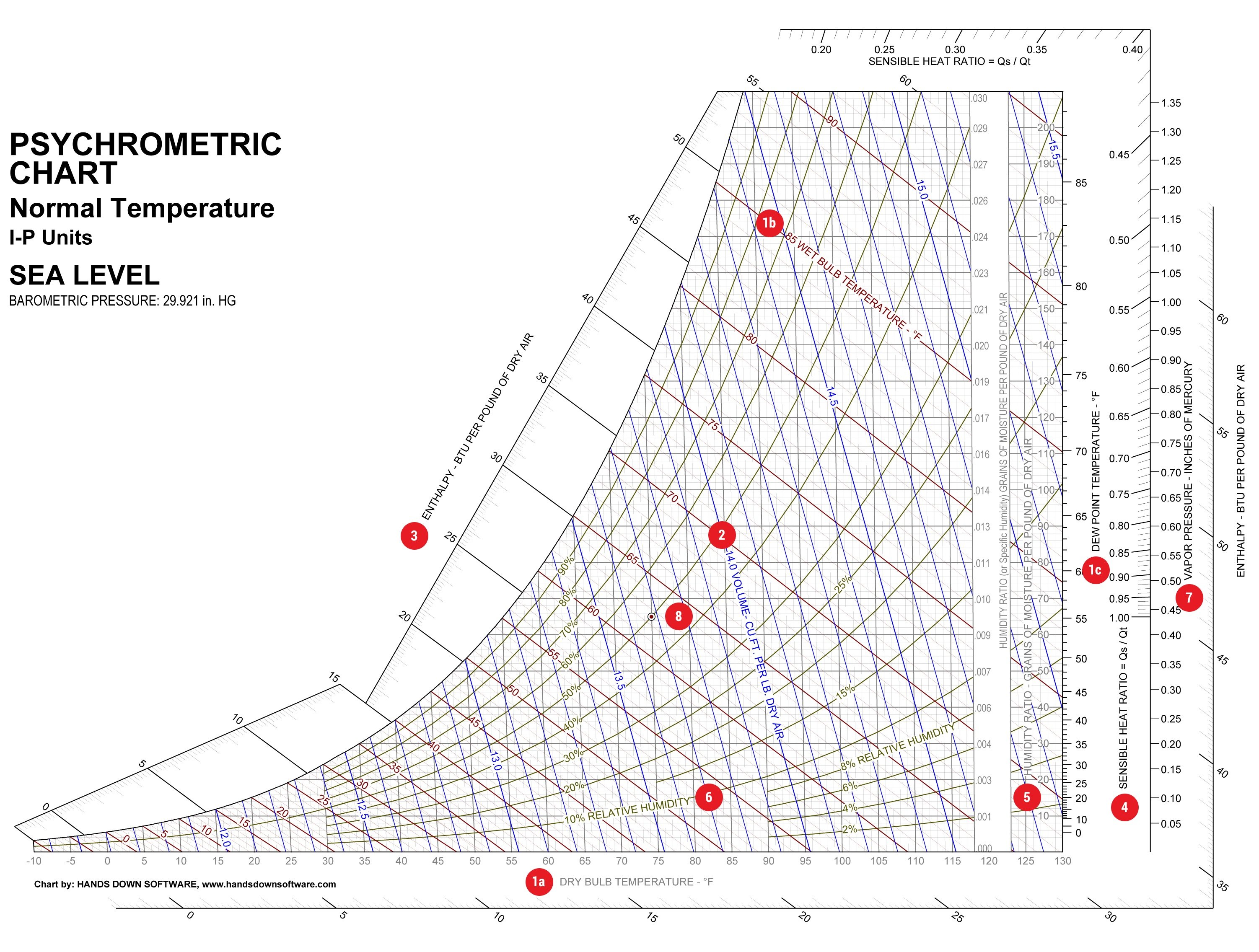
Psychrometric Chart Dew Point On

Psychrometric Tables Dew Point
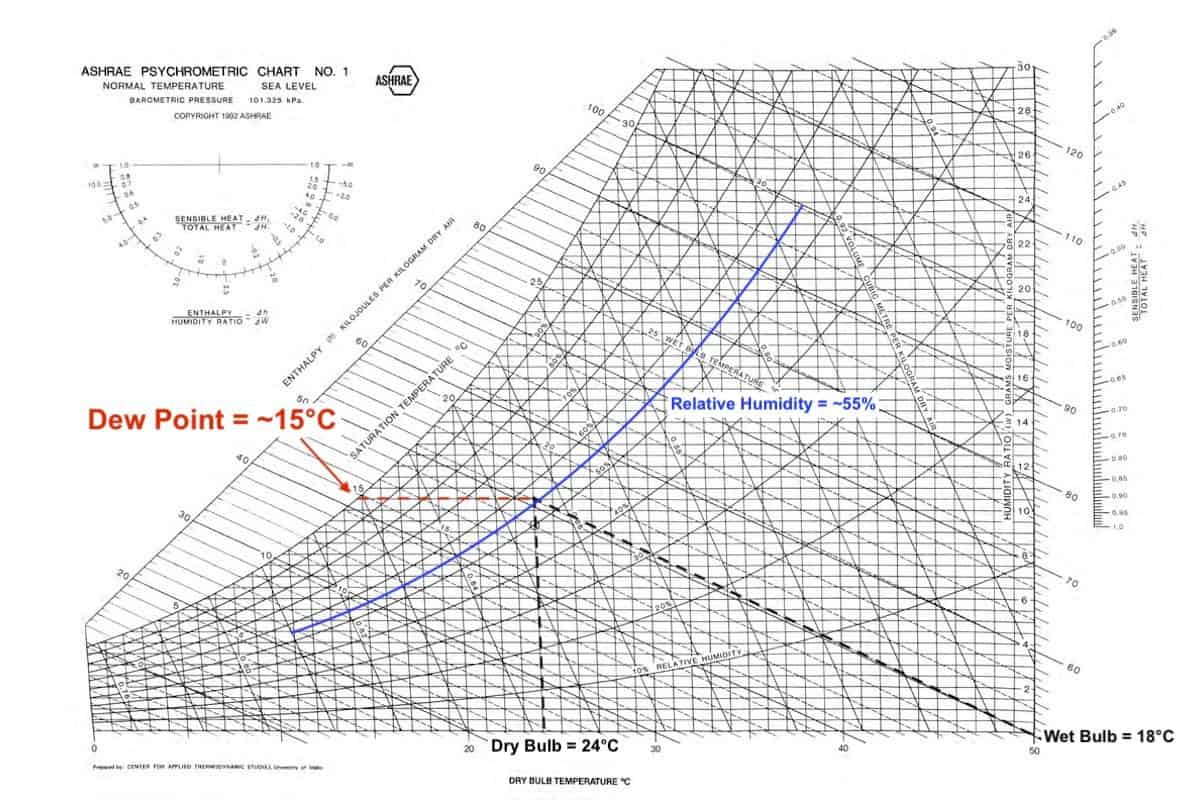
How to Read a Psychrometric Chart? aircondlounge

How to Read a Psychrometric Chart 11 Steps (with Pictures)
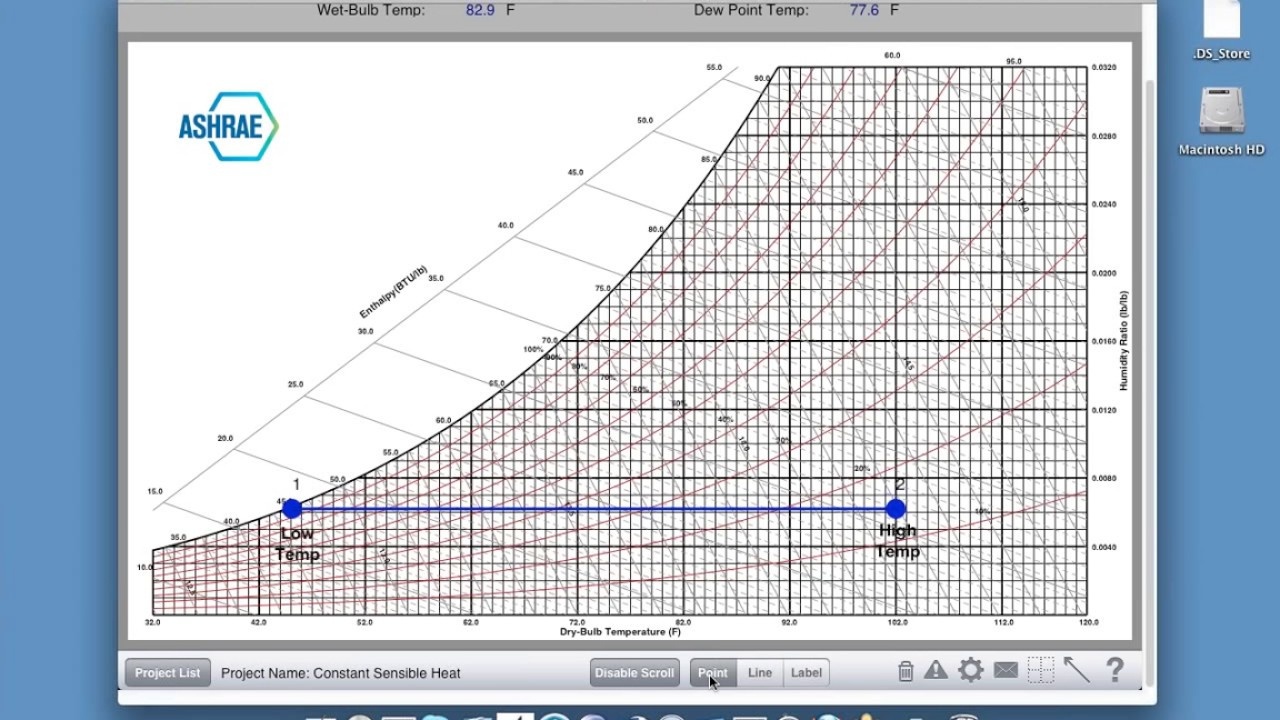
Dew Point From Psychrometric Chart

Understand Dew Point and Absolute Moisture, The Right Side of the Psych

Psychrometric chart used to determine dew point of space based on

Psychrometric Chart Dew Point On

Dew point psychrometric chart weevir
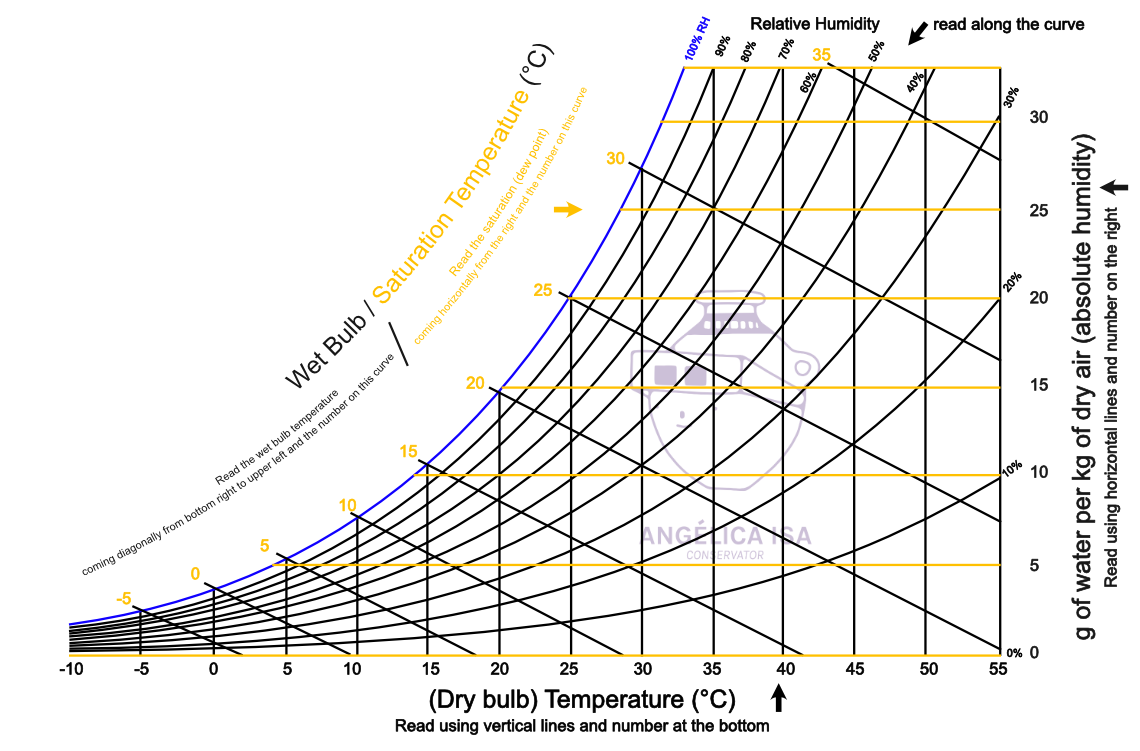
Understanding psychrometric charts and dew points Angelica Isa
The Temperature At Which Water Will Condense On Surfaces Is Called The Dew Point.
Air Is Going To Always Be More Dense At Colder Temperatures.
The Psychrometric Chart Is Your Friend.
The Dew Point Is Measured Vertically And Usually Measured In Degrees Fahrenheit Or Degrees Celsius, On This Chart It Is Measured In Fahrenheit.
Related Post: