
Bond Length Chart
Bond Length Chart - Bond order is the number of electron pairs that hold two atoms together. Bond energies and bond lengths. The higher the bond order, the stronger the pull between the two atoms and the shorter the bond length. A shorter bond length has higher bond energy. This is because as we go down the group, the atomic radius increases. A bond is not static but dynamic with the atoms undergoing the attractive and repulsive forces as described in the potential well (fig. This unit is part of the chemistry library. As we go across a period we see bond length decreases. Single and multiple covalent bonds. Lewis diagram of formaldehyde (ch₂o) Web the amount of energy required to break all covalent bonds of the same type in one mole of a compound in a gaseous state is called bond energy. Web from this graph, we can determine the equilibrium bond length (the internuclear distance at the potential energy minimum) and the bond energy (the energy required to separate the two atoms). Web in molecular geometry, bond length or bond distance is defined as the average distance between nuclei of two bonded atoms in a molecule. Lewis diagram of formaldehyde (ch₂o) Single and multiple covalent bonds. Before we go into the details explaining the bong lengths and bond strengths in organic chemistry, let’s put a small summary for these two properties right from the beginning as it stays relevant for all types of bonds we are going to talk about. A shorter bond length has higher bond energy. As we go across a period we see bond length decreases. It is a transferable property of a bond between atoms of fixed types, relatively independent of the rest of the molecule. 8.9.1), where the bottom of the well represents the equilibrium position of the oscillating atoms, which. Bond order is the number of electron pairs that hold two atoms together. Single bonds have a bond order of one, and multiple bonds with bond orders of two (a double bond) and three (a triple bond). A bond is not static but dynamic with the atoms undergoing the attractive and repulsive forces as described in the potential well (fig.. It is a transferable property of a bond between atoms of fixed types, relatively independent of the rest of the molecule. Browse videos, articles, and exercises by topic. This unit is part of the chemistry library. Bond order is the number of electron pairs that hold two atoms together. This is because as we go down the group, the atomic. A bond is not static but dynamic with the atoms undergoing the attractive and repulsive forces as described in the potential well (fig. Web the amount of energy required to break all covalent bonds of the same type in one mole of a compound in a gaseous state is called bond energy. A shorter bond length has higher bond energy.. The length of the bond is determined by the number of bonded electrons (the bond order). This unit is part of the chemistry library. Web bond length is defined as the distance between the centers of two covalently bonded atoms. Predicting bond type (metals vs. 8.9.1), where the bottom of the well represents the equilibrium position of the oscillating atoms,. This unit is part of the chemistry library. Web in molecular geometry, bond length or bond distance is defined as the average distance between nuclei of two bonded atoms in a molecule. This is because as we go down the group, the atomic radius increases. Web below is a table of average bond lengths. It is a transferable property of. Bond length and bond strength. Lewis diagram of formaldehyde (ch₂o) Single bonds have a bond order of one, and multiple bonds with bond orders of two (a double bond) and three (a triple bond). As we go across a period we see bond length decreases. Web bond length is defined as the distance between the centers of two covalently bonded. Bond length and bond strength. The length of the bond is determined by the number of bonded electrons (the bond order). The bond energy is inversely proportional to the bond length. Web in molecular geometry, bond length or bond distance is defined as the average distance between nuclei of two bonded atoms in a molecule. It is a transferable property. It is a transferable property of a bond between atoms of fixed types, relatively independent of the rest of the molecule. The length of the bond is determined by the number of bonded electrons (the bond order). Web from this graph, we can determine the equilibrium bond length (the internuclear distance at the potential energy minimum) and the bond energy. As we go across a period we see bond length decreases. The bond energy is inversely proportional to the bond length. The length of the bond is determined by the number of bonded electrons (the bond order). Bond length and bond strength. It is a transferable property of a bond between atoms of fixed types, relatively independent of the rest. Bond energies and bond lengths. A shorter bond length has higher bond energy. Web in molecular geometry, bond length or bond distance is defined as the average distance between nuclei of two bonded atoms in a molecule. Before we go into the details explaining the bong lengths and bond strengths in organic chemistry, let’s put a small summary for these. Bond length and bond strength. This unit is part of the chemistry library. The bond energy is inversely proportional to the bond length. A bond is not static but dynamic with the atoms undergoing the attractive and repulsive forces as described in the potential well (fig. Web below is a table of average bond lengths. The higher the bond order, the stronger the pull between the two atoms and the shorter the bond length. Bond energies and bond lengths. Before we go into the details explaining the bong lengths and bond strengths in organic chemistry, let’s put a small summary for these two properties right from the beginning as it stays relevant for all types of bonds we are going to talk about. Single and multiple covalent bonds. Web in molecular geometry, bond length or bond distance is defined as the average distance between nuclei of two bonded atoms in a molecule. Browse videos, articles, and exercises by topic. Web bond length is defined as the distance between the centers of two covalently bonded atoms. This is because as we go down the group, the atomic radius increases. The length of the bond is determined by the number of bonded electrons (the bond order). A shorter bond length has higher bond energy. Single bonds have a bond order of one, and multiple bonds with bond orders of two (a double bond) and three (a triple bond).![Bond lengths [Å] and angles [°] for 4c Download Scientific Diagram](https://www.researchgate.net/publication/333256073/figure/download/tbl2/AS:761180935159811@1558491085331/Bond-lengths-A-and-angles-for-4c.png)
Bond lengths [Å] and angles [°] for 4c Download Scientific Diagram
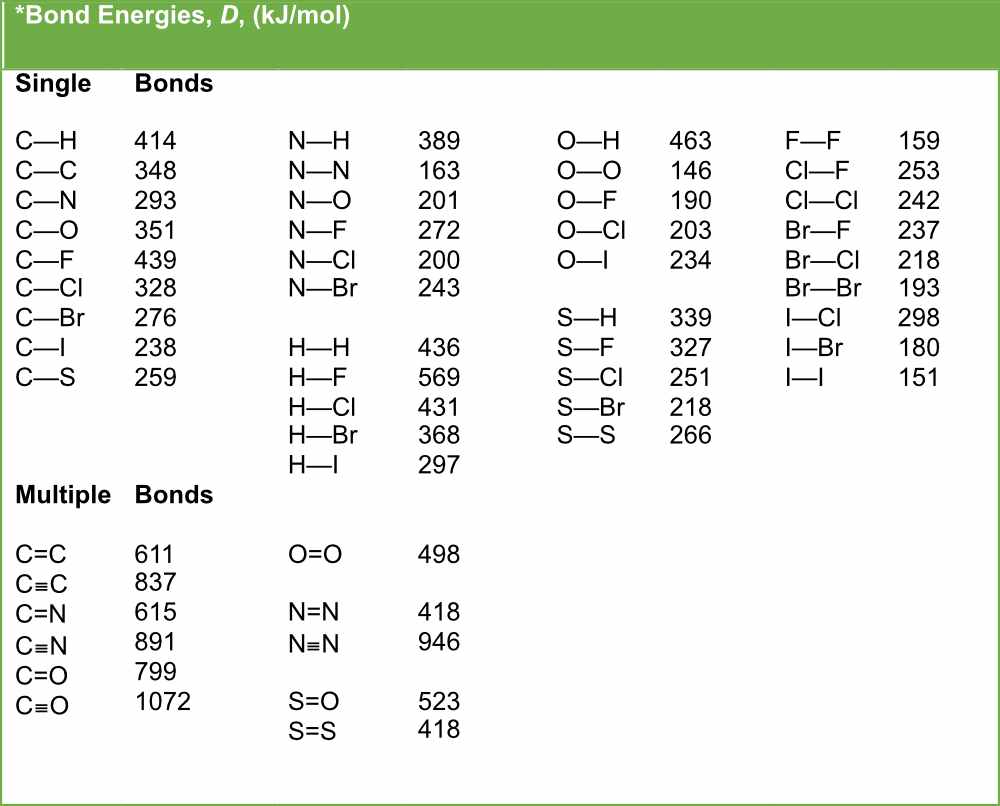
Bond Length and Bond Strength Pathways to Chemistry

Bond Length and Bond Strength Chemistry Steps
.PNG)
Bond Length and Bond Energy
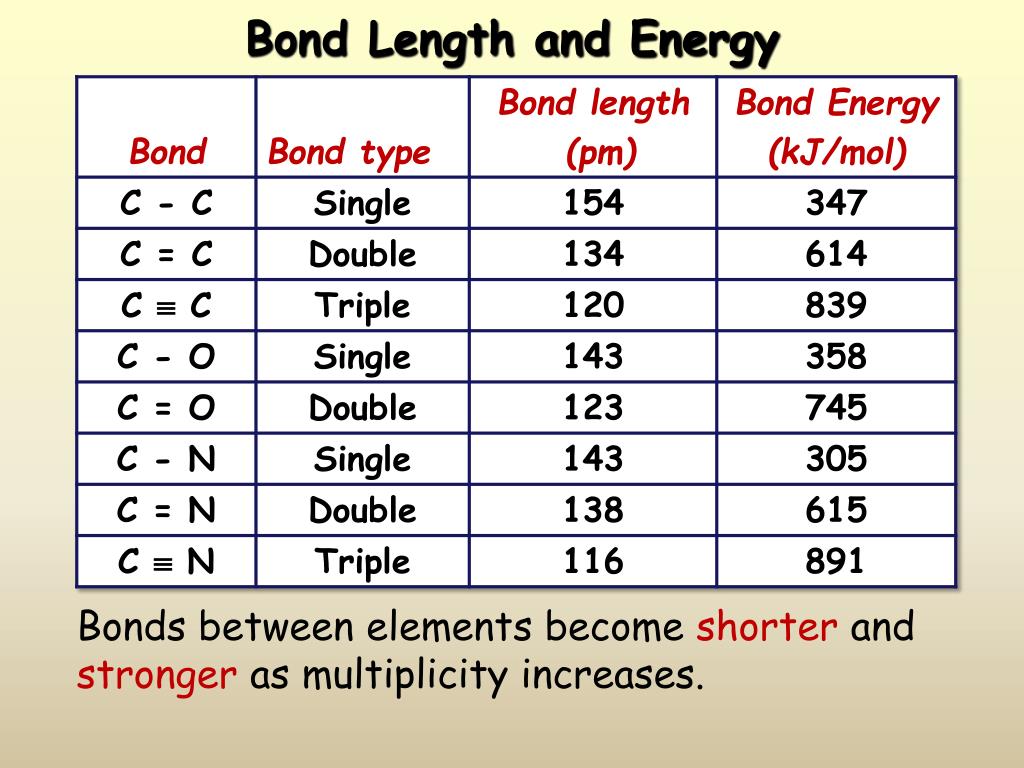
PPT Covalent Bonding PowerPoint Presentation, free download ID1102596

Selected bond lengths (Å), bond angles ( • ), and intermolecular

PPT Chemical Bonding and Molecular Structure (Chapter 9) PowerPoint

Bond Length and Bond Strength Chemistry Steps

PPT 1. Structure and Bonding PowerPoint Presentation, free download

Selected bond lengths (Å) and bond angles (°) for ligand Download Table
Predicting Bond Type (Metals Vs.
As We Go Across A Period We See Bond Length Decreases.
Web The Amount Of Energy Required To Break All Covalent Bonds Of The Same Type In One Mole Of A Compound In A Gaseous State Is Called Bond Energy.
Web From This Graph, We Can Determine The Equilibrium Bond Length (The Internuclear Distance At The Potential Energy Minimum) And The Bond Energy (The Energy Required To Separate The Two Atoms).
Related Post: